Status: In development · November 2026
Collaboration: The LRA and Toronto Metropolitan University’s School of Urban and Regional Planning, through a Fall 2026 planning studio building on the LRA’s Public Realm and Open Space Master Plan.
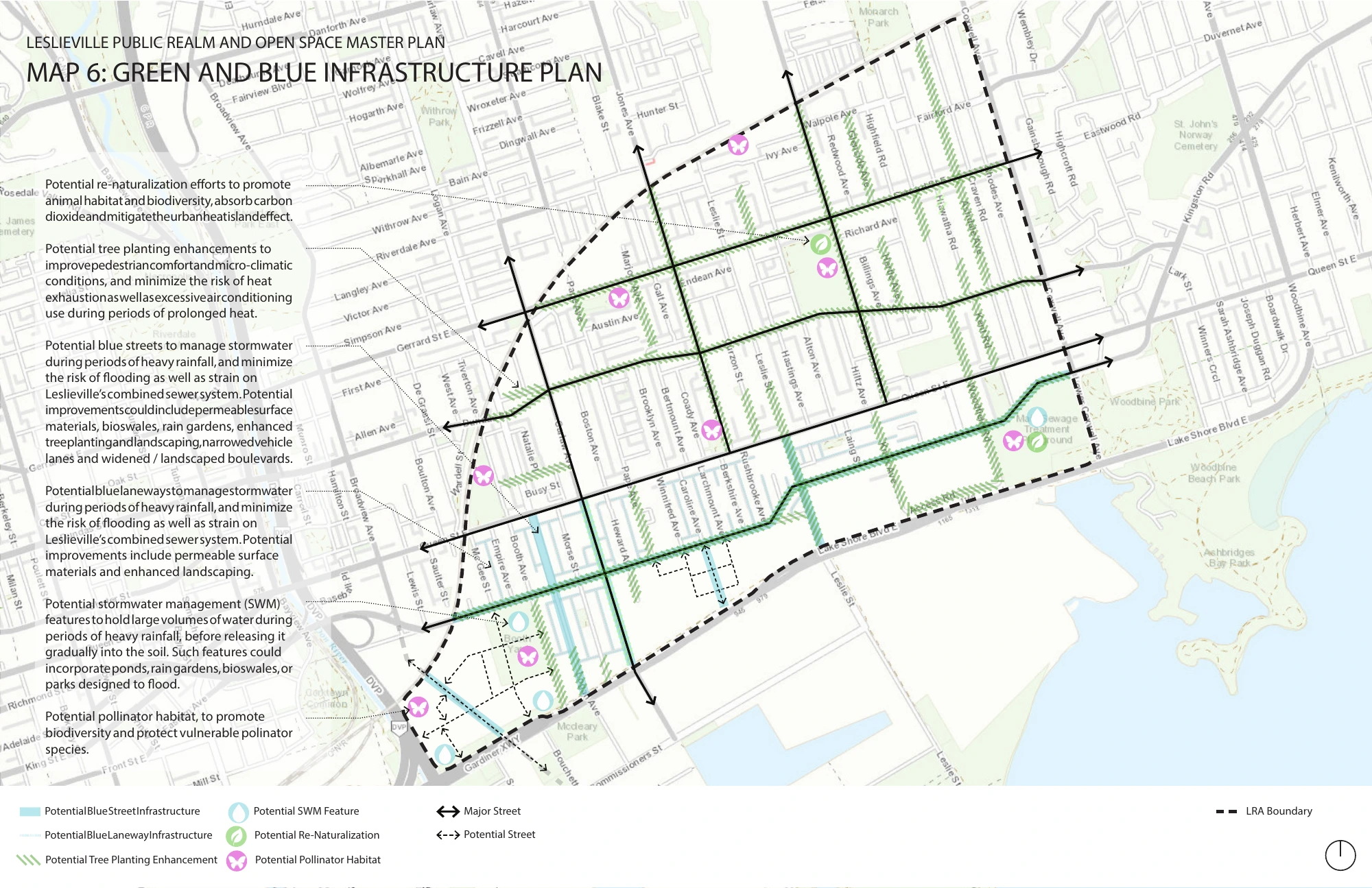
The current strategy builds directly on the findings of the Leslieville Public Realm and Open Space Master Plan. Its detailed maps identified connected opportunities for tree canopy, blue streets and laneways, permeable surfaces, active transportation, habitat and community infrastructure.
Through the Fall 2026 studio collaboration, we are taking that foundation further: updating the evidence, testing earlier opportunities against today's conditions and identifying practical ways to reduce emissions and prepare for climate impacts.
What the strategy adds
Updated risks and opportunities
Assess heat, heavy rainfall and verified flooding, smoke, outages and other disruptions alongside neighbourhood assets and change since the master plan was prepared.
Emissions reduction
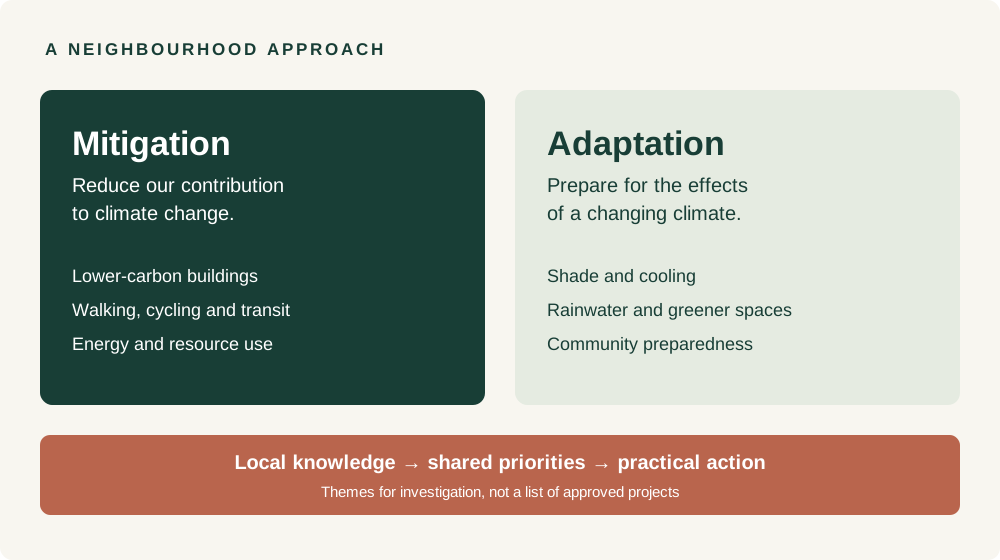
Identify practical action on buildings and energy, walking, cycling and transit, connecting lower-carbon choices with affordability and neighbourhood quality.
Adaptation and community capacity
Consider shade, cooling, drainage, ecological connections and the local facilities and networks that help people prepare, cope and recover.
A route to implementation
Develop three demonstration concepts, identify potential delivery partners, resources and maintenance needs, and prepare a first-year LRA action agenda.
Equity, accessibility and health run through the work. Priorities will consider who faces the greatest combined risks and who has the fewest resources to respond, as well as the wider benefits for housing affordability, biodiversity and community life.
Connecting with work already underway
The strategy will look for opportunities to align with the BIA streetscape initiative, the laneway project, transit investment and other neighbourhood changes. The aim is to turn the master plan's findings into a focused set of priorities the LRA can lead, help coordinate or advocate for.
How you can help
Share observations about summer heat, flooding, shade, buildings, greenery and community spaces. Tell us which places work well, who may be missing out and where local action would make a difference.
Share local knowledge